Are you thinking about migrating to the cloud? Here are 5 questions you should answer before you begin.

Cloud computing has transformed how businesses manage their IT infrastructure. Today, organizations of all sizes are migrating applications, servers, and data to cloud platforms to improve scalability, reduce operating costs, and increase service availability. However, migrating to the cloud is not simply about moving information from one place to another. A successful implementation requires planning, analysis, and a strategy aligned with business objectives. Before starting a migration project, here are five fundamental questions every company should answer.
1. Which applications will migrate?
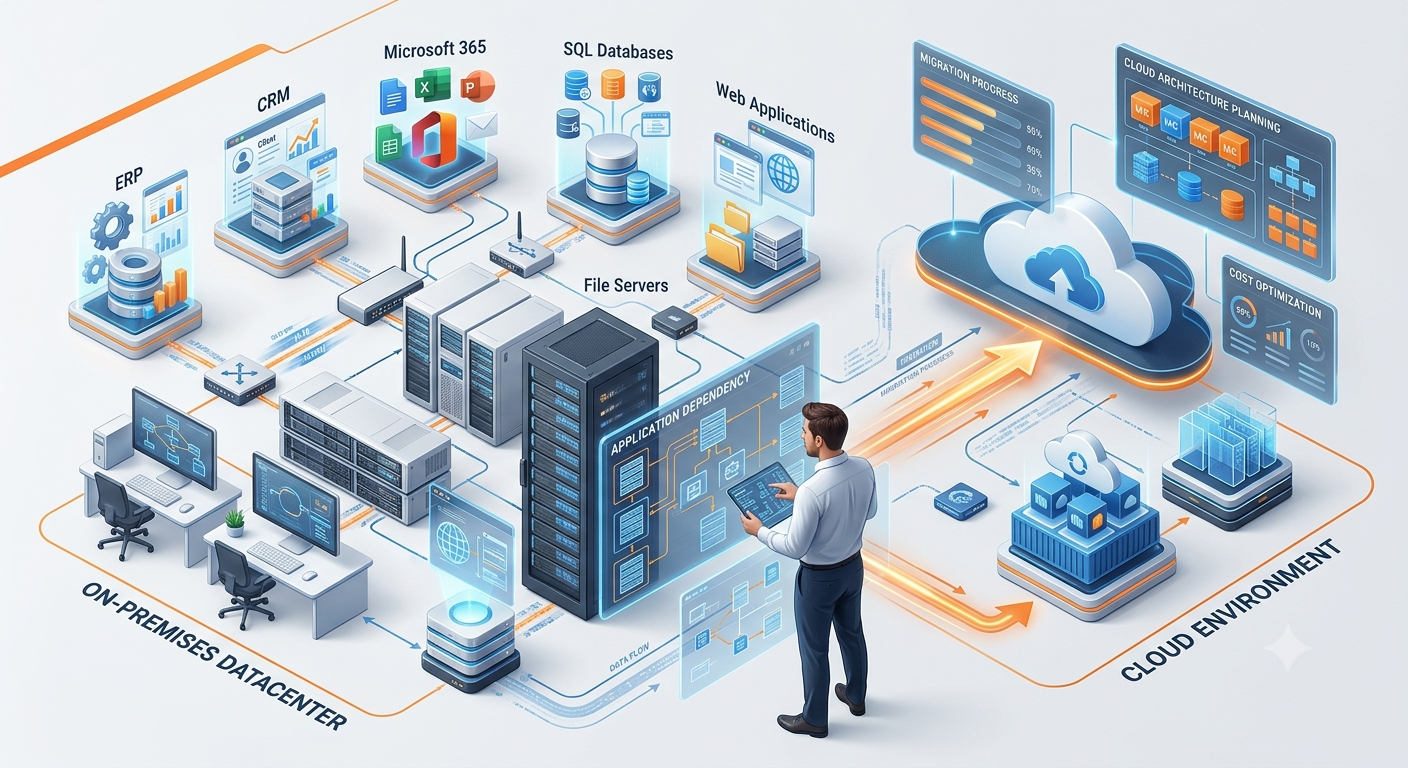
Not all applications have the same technical requirements or the same impact within the organization. It is important to identify which ones are critical to operations, which ones can be migrated without affecting business continuity, and which ones require adjustments before being moved to a cloud environment. Furthermore, it is advisable to analyze the dependencies between applications to avoid unexpected disruptions during the migration process.
2. What will be the total cost of the migration?
One of the most common mistakes is to only think about the monthly cost of the cloud service. A migration can also involve investments related to:
- Discharge.
- Implementation services.
- Storage.
- Data transfer.
- Staff training.
- Continuous administration.
Conducting a preliminary analysis will allow you to know the total cost of the project and avoid unexpected expenses in the future.
3. What information is truly critical?
Not all information has the same level of importance. Before migrating, it is advisable to classify the data according to its level of criticality. For example:
- Financial information.
- Corporate databases.
- Legal documentation.
- Customer information.
- Strategic applications.
This classification will facilitate the definition of appropriate security and backup policies for each type of information.

4. Ho



¿Tu infraestructura productiva cumple con los estándares de seguridad?
La mayoría de las empresas cree que está protegida… hasta que descubre lo contrario.